
Episode 325 of our site: The Laughter Boosting Apparatus, Home-made USB-C Charging Cables, and Plastic Punching Tools
This week on the podcast, Elliot and Al are back after a week-long break, catching up on clocks, DIY USB cables, and more!
Our 2025 Pet Hacks Contest has come to an end, and winners will be announced shortly, so keep your eyes peeled. Fancy a free ticket to Supercon? Simply submit a talk, and if it gets accepted, it's yours! November is just around the corner, so get your talk together!
We're big fans of the NOAA Polar satellites, but unfortunately, they might be reaching the end of their lifecycle. Although the agency hasn't pulled the plug yet, they won't be maintaining them anymore, and if they act up, they could be shut down for safety reasons.
Elliot took some time off, so Al took care of the sound for a change. In a twist of fate, Elliot was in charge of the guessing this week. He did okay, but there's always room for improvement. If you think you can do better, there's a chance you could get your hands on a highly coveted our website Podcast T-shirt.
This week, the guys were intrigued by magnets, clocks, cables, 3D printed machine tools, and old moonbase proposals. For the articles you can't miss, Al scored a double, as Elliot picked an article about the gadget that generated laugh tracks in the latter part of the 20th century, and Al shamelessly chose an article about the role of British ham radio operators during WWII.
Catch up on anything you missed, and let us know what you think about the week in our website.
Listen to us in DRM-free MP3, oxygen-free, and unencrypted.
Follow our podcasts:
- iTunes
- Spotify
- Stitcher
- RSS
- YouTube
- Check out our Libsyn landing page
Episode 325 Show Notes:
News:
- 2025 Pet Hacks Contest
- NOAA Polar Satellites
What's that Sound?
- Did you guess the sound correctly? Elliot came close, so let's see if you can do better.
Interesting Hacks of the Week:
- Iron Nitride Permanent Magnets Made With a DIY Ball Mill
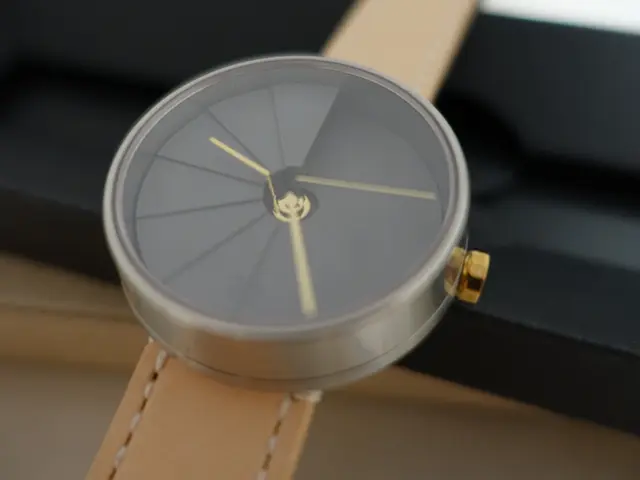
- This Thermochromic Clock Is a Burst of Sunshine
- What Happened to Duracell PowerCheck?
- The Most Trustworthy USB-C Cable is DIY
- All About USB-C: Cable Types
- A Concentric Clock With Multiple Modes
- Compound Press Bends, Punches, and Cuts Using 3D Printed Plastic
- History of Forgotten Moon Bases
Quick Hacks:
- Elliot's Picks:
- Expanding Racks in the Spirit of the Hoberman Sphere
- The Switch 2 Pro Controller: Prepare for Glue and Fragile Parts
- Watkin's Tower: London's Failed Eiffel Tower
- BhangmeterV2 Answers the Question "Has a Nuke Gone Off?"
- Al's Picks:
- Building a Cyberpunk Modular Keyboard
- Split Keyboard Uses No PCB
- LED Probe: A Smart, Simple Solution for Testing LEDs
Can't-Miss Articles:
- Just For Laughs: Charlie Douglass and the Laugh Track
- Crowdsourcing SIGINT: Ham Radio at War
- High-Stakes Fox Hunting: The FCC's Radio Intelligence Division in WWII
Enrichment Data:
As of June 2025, NOAA is in the process of retiring its Polar Operational Environmental Satellites (POES), marking the end of a significant era for these long-serving weather satellites.
Current Status of NOAA Polar Satellites
- NOAA-18 was officially decommissioned on June 6, 2025. This satellite is now permanently out of service.
- NOAA-15 and NOAA-19 have suspended delivery of operational POES data as of June 16, 2025, 18:00 UTC, and are beginning End of Life (EOL) testing activities. As a result, operational products from these satellites are no longer being distributed for operational use.
- Despite the suspension of most operational data streams, some services remain accessible in a limited capacity:
- The Automatic Picture Transmission (APT) and Low-Rate Picture Transmission (LRPT) services remain enabled but are not intended for operational use.
- High Resolution Picture Transmission (HRPT) remains enabled only for diagnostic flight purposes.
- Some other services such as Argos data collection (DCS/ADCS) and SARSAT Search and Rescue (SARR) continue on a best-effort basis without operational guarantees.
Impact and Legacy
- The POES program has operated since October 1978, providing invaluable data for weather forecasting, environmental monitoring, and disaster detection worldwide.
- These satellites were unique in broadcasting publicly accessible imagery that could be received and decoded by affordable software defined radios (SDRs), making them popular not only with professional users but also with amateur radio enthusiasts.
Potential Future
- The full operational use of NOAA-15 and NOAA-19 has ended, and NOAA is encouraging users to transition to other data sources for environmental satellite data.
- Although the satellites are at or near end of life, some imaging transmissions like APT/LRPT will remain publicly accessible for the foreseeable future, preserving a resource for hobbyists and diagnostic purposes.
- NOAA is expected to rely more heavily on newer satellite systems, such as the Joint Polar Satellite System (JPSS), which provide modernized instrumentation and enhanced capabilities beyond the legacy POES fleet.
- In the latest episode of the podcast, the guys discussed a DIY project involving the creation of Iron Nitride Permanent Magnets, one of the Interesting Hacks of the Week.
- Al picked an article about the role of British ham radio operators during WWII as one of the Can't-Miss Articles, highlighting the important contribution of technology in data-and-cloud-computing and technology.
- Listeners can still receive the podcast in DRM-free MP3 format, featuring the latest news such as the NOAA Polar Satellites, which might be reaching the end of their lifecycle and could be replaced by newer satellite systems like the Joint Polar Satellite System (JPSS).