
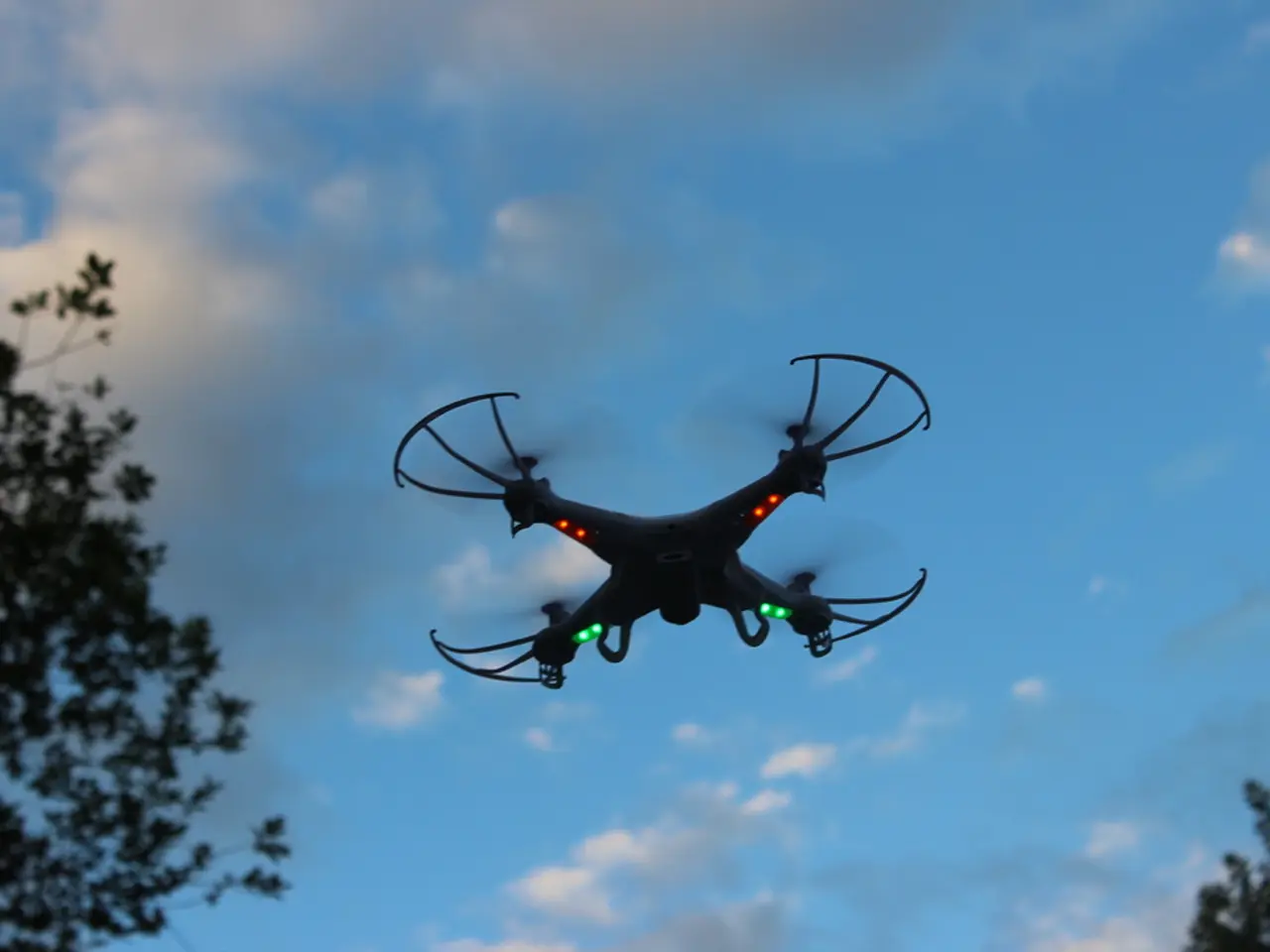
Impact of Self-Contained Drone Systems Revolutionizing Drone Sector
In a groundbreaking development, Drone-in-a-Box (DiaB) systems like the DJI Dock and Skydio Dock are transforming the landscape of public safety, security, and critical infrastructure management. These innovative systems enable fully autonomous, on-demand, and rapid deployment of drones for inspection, surveillance, and emergency response tasks.
The benefits of DiaB systems are manifold. In public safety, they are being used to deploy drones as first responders (DFR), providing real-time situational awareness before human responders arrive, thereby saving crucial time in emergency situations [1]. In the security sector, DiaB systems are used for autonomous surveillance, allowing drones to respond immediately to triggers such as alarms or unauthorized access [1].
One of the key impacts of DiaB systems is their ability to perform rapid autonomous deployment and continuous monitoring. Drones can be stored, charged, and launched automatically from secure docking stations, supporting real-time surveillance and quicker response during emergencies or security threats [4]. This capability is particularly critical for public safety agencies and security providers.
Cost and efficiency gains are another significant advantage. Automated Beyond Visual Line of Sight (BVLOS) operations, enabled by AI and edge computing, reduce the need for personnel and manual intervention [1]. For instance, oil and utility companies using AI-powered DiaB drones have reported millions in annual savings due to efficient inspections and predictive maintenance [1].
Integrated sensors and AI in DiaB drones also enable frequent, precise inspections of infrastructure such as pipelines, water networks, and critical facilities. This supports predictive maintenance strategies, reducing downtime and preventing failures—key for critical infrastructure management [1].
DiaB systems also improve safety for personnel by enabling remote and automated inspection of hazardous areas, such as leak detection in water utilities, which traditionally required dangerous manual inspections [4].
Scalable and flexible drone services are another advantage. When combined with Drone as a Service (DaaS) models, DiaB allows organizations to scale drone use without large capital investments in drone fleets, making cutting-edge aerial data more accessible across diverse industry needs, including security and emergency management [2].
The future of drone operations is autonomous and remote, with DiaB systems like the DJI Dock and Skydio Dock playing a key role in enabling this future. With the correct installation and maintenance, drones in a docking station can operate autonomously, reducing the risk of system failures and ensuring maximum uptime [3].
In conclusion, DiaB systems are catalysing a new operational paradigm in critical sectors by shifting from periodic, labor-intensive inspections and surveillance to continuous, autonomous aerial monitoring. This technology growth is underscored by soaring investments and advancing AI capabilities that expand DiaB applicability across public safety, security, and infrastructure domains [1].
[1] https://www.droneindustryinsights.com/ [2] https://www.dronesasaservice.com/ [3] https://www.dji.com/ [4] https://skydio.com/
- The management of public safety and critical infrastructure is being revamped with the implementation of Drone-in-a-Box (DiaB) systems, such as the DJI Dock and Skydio Dock, which enable the autonomous deployment and monitoring of drones for various tasks.
- In emergency situations, DiaB systems can deploy drones as first responders (DFR) for real-time situational awareness, potentially saving crucial time.
- For security purposes, these systems are utilized for autonomous surveillance, ensuring immediate response to triggers like alarms or unauthorized access.
- Cost and efficiency advantages come from the automation of Beyond Visual Line of Sight (BVLOS) operations, which reduce the need for personnel and manual intervention, leading to significant annual savings for companies such as oil and utility firms.
- Integrated sensors and AI in DiaB drones enable frequent, precise inspections of infrastructure, supporting predictive maintenance strategies and minimizing downtime and potential failures.
- DiaB systems also enhance safety for personnel by permitting remote and automated inspection of hazardous areas, reducing the need for potentially dangerous manual inspections.