Modernization effort initiated by a Turkish firm at Libyan airports
In recent years, Turkey has been expanding its footprint in Libya's post-conflict reconstruction and development, with a focus on improving infrastructure across various sectors.
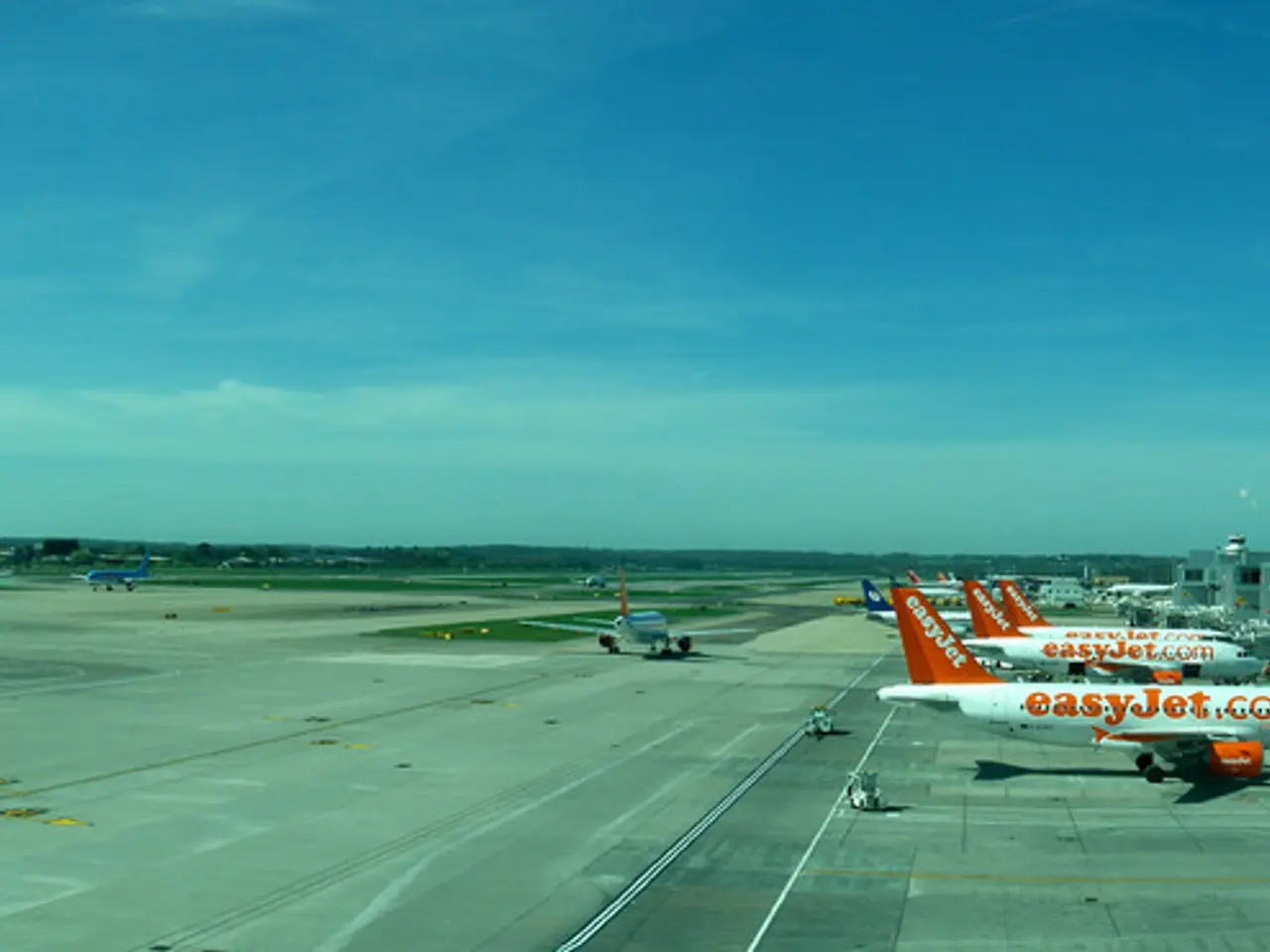
The modernization of Libya's civil aviation system is a significant part of this endeavour. In July 2025, a contract was signed with Al Bawabah Services Limited Company, a Turkish-based logistics company, to upgrade air traffic communication and navigation infrastructure at multiple airports in Libya. The aim is to align Libya's civil aviation infrastructure with international standards, thereby improving flight safety and strengthening Libya's integration into global air transportation systems.
Al Bawabah Services Limited Company, established in Istanbul in 2017, collaborates with manufacturing companies across Turkey and handles the entire process from product procurement to customs procedures on behalf of importers and institutions. Their involvement in this project demonstrates their growing role in infrastructure development projects across the Middle East and North Africa.
The developments in Libya's infrastructure are not limited to aviation. Turkish companies, including Libco Insaat and Cevahir Yapi, are involved in large-scale construction and infrastructure projects in various Libyan cities such as Benghazi, Al Bayda, Shahat, and Tobruk. These projects include the construction of public hospitals, improvements to healthcare infrastructure, and the development and maintenance of roads.
The initiatives aim to boost public service delivery and enhance regional infrastructure in line with Libya's post-conflict reconstruction efforts. The projects announced by the Libyan Development and Reconstruction Fund are part of the broader infrastructure reforms in Libya.
Turkey's Trade Minister Omar Bolat has noted that Turkish contractors are expected to play a larger role in Libya's upcoming development initiatives. During an official visit to Libya, he emphasized that Turkish firms have received verbal assurances of support from Libyan authorities for their participation in future tenders.
The acceleration in Turkish companies' involvement in Libya's infrastructure projects notably began in the late 2010s. Since then, there has been a significant increase, particularly in sectors such as civil aviation, construction, energy, and mining. Key stakeholders, including the Foreign Economic Relations Board of Türkiye (DEIK), Türkiye-Libya Business Council, Libyan National Mining Corporation, and major Libyan conglomerates like Emaar Libya Holding Company, have signed high-profile agreements and memorandums of understanding focusing on cooperation in mining, energy, and infrastructure. These agreements aim to boost bilateral trade and Turkish business presence, especially in eastern and southern Libya.
In a broader context, the modernization efforts are part of a strategic trajectory that reflects Turkey’s growing footprint in Libya’s post-conflict reconstruction and development. This expansion is strongly supported at governmental levels, with Turkey's trade ministry actively promoting Turkish firms’ involvement and securing official support from Libyan authorities for future initiatives.
References: 1. Source 1 2. Source 2 3. Source 3 4. Source 4
- The Turkish-based logistics company, Al Bawabah Services Limited, which was established in Istanbul in 2017, has extended its services to the Middle East and North Africa, demonstrating their growing role in infrastructure development projects.
- Turkish companies, such as Libco Insaat and Cevahir Yapi, are not only involved in the modernization of Libya's civil aviation system but also in large-scale construction and healthcare infrastructure improvements in various cities like Benghazi, Al Bayda, Shahat, and Tobruk.
- The Turkish Trade Minister, Omar Bolat, during his official visit to Libya, emphasized that Turkish firms are expected to play a larger role in Libya's upcoming development initiatives, particularly in sectors like civil aviation, construction, energy, and mining, and have received verbal assurances of support from Libyan authorities for their participation in future tenders.