
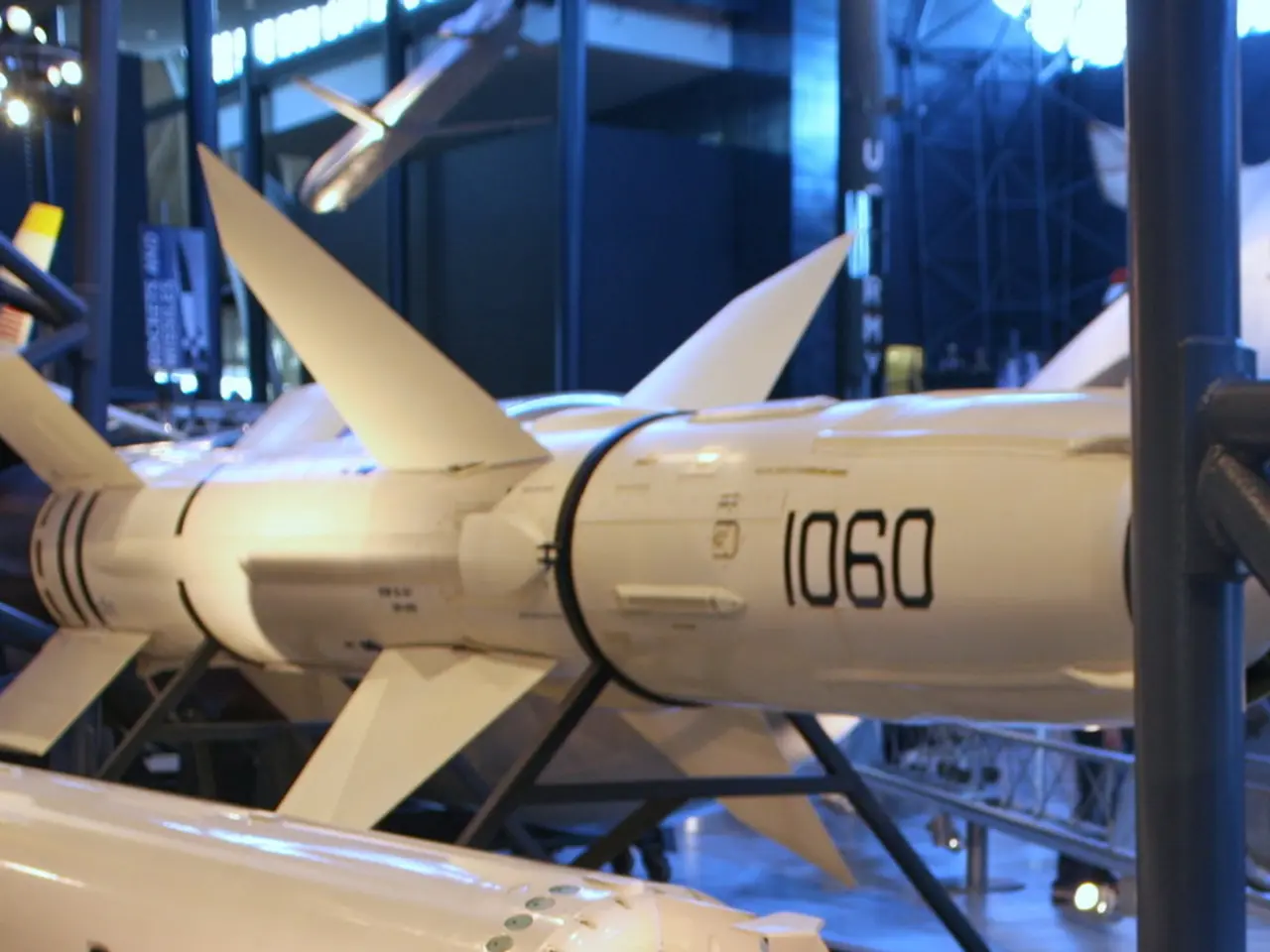
Rocket Powered by Solid Fuel: Comprehensive Description & Insight - Lexicon of Rocket Science & Propulsion
Solid fuel rockets, a simple and reliable means of generating thrust, play a crucial role in modern rocketry and propulsion. These rockets, which use solid propellants as their fuel source, are essential in various applications across space exploration, military defense, and commercial satellite launches.
In space exploration, solid rocket motors are frequently used as strap-on boosters to provide the initial high thrust needed to lift heavy payloads through Earth's dense atmosphere. Notable examples include the Space Shuttle’s solid rocket boosters and the boosters used by the Ariane 5 and NASA’s Space Launch System. These solid boosters provide raw power for launch, after which liquid-fueled cores complete the journey to orbit, combining the benefits of both fuel types. SpaceX’s Falcon Heavy, while primarily liquid-fueled, builds on this concept and uses multiple powerful cores to achieve heavy lift capability, although it does not use solid fuel specifically.
In military defense, solid propellant rockets are essential in missile systems due to their ability to deliver instant ignition, high thrust, and long-term storability without the complexity of liquid fueling. Examples include intercontinental ballistic missiles (ICBMs) and short-range interceptors. Advanced developments in Highly Loaded Grain (HLG) solid propellants for Next-Generation Short-Range Interceptor missiles demonstrate ongoing enhancements in burn time and energy density, increasing missile speed and tactical flexibility.
For commercial satellite launches, solid rockets are often used as kick stages to adjust or finalize satellite orbits after the primary launch vehicle has reached space, due to their reliability and simplicity. They also provide supplemental thrust in launch vehicles to increase payload capacity or reduce launch costs. Though many commercial launches rely heavily on liquid-propulsion cores, solid boosters remain integral components in hybrid launch systems, enhancing performance during ascent.
The main components of a solid fuel rocket include the rocket body, the solid propellant, the nozzle, and the ignition system. The propellant is a mixture of fuel and oxidizer that is packed into a cylindrical casing and designed to burn at a controlled rate. The nozzle, located at the rear of the rocket, is responsible for directing the exhaust gases in the desired direction. The ignition system is used to ignite the propellant and start the combustion process.
Solid fuel rockets are attractive for missions that require quick deployment or a high level of reliability. However, they tend to have lower specific impulse compared to liquid fuel rockets, which can limit their efficiency and overall performance. Another disadvantage is their limited flexibility in terms of trajectory adjustments, and their inability to be throttled or shut down once ignited.
The continued development and improvement of solid fuel rockets will likely lead to even more advanced uses in the future, further solidifying their role in the realm of space exploration, military defense, and commercial satellite launches.
- The advanced science and technology behind solid fuel rockets contribute significantly to their essential role in various applications across space exploration, military defense, and commercial satellite launches.
- In the realms of space-and-astronomy, solid rocket motors are often utilized in advanced applications such as kick stages for satellite orbit adjustments due to their reliability and simplicity.